EP 301: Producers — Creative vs. Production
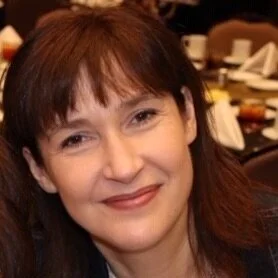
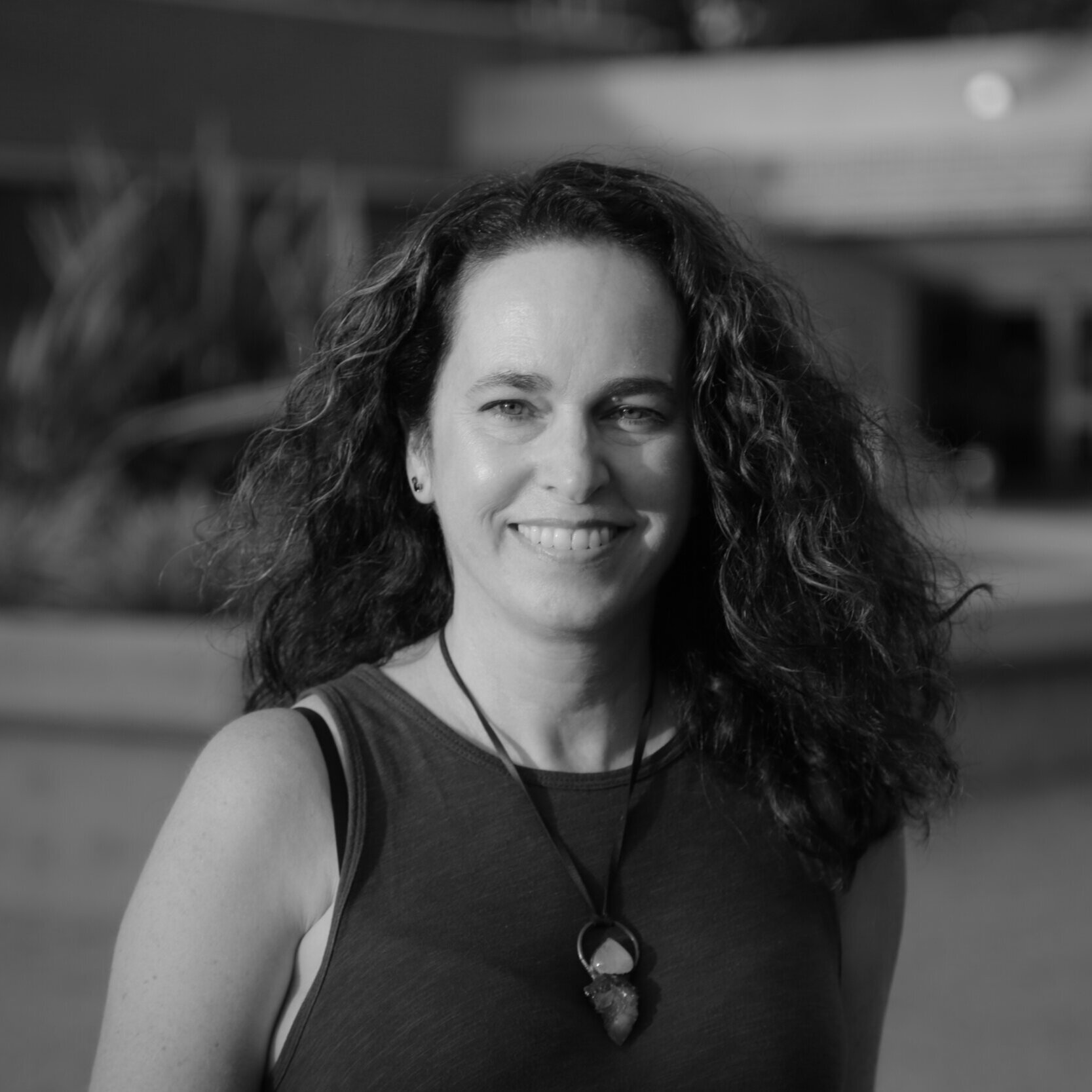
Guests: Jessica Malanaphy, Jeanette Volturno, and Fanshen Cox.
How does a script transition from development to production? Producers Jessica Malanaphy, Jeanette Volturno, and Fanshen Cox talk creative versus physical producing, packaging and financing, casting and inclusion, and everything that happens between loving a story and green light.
Transcript
Julie: This is the Catch a Break podcast, the insider’s guide to breaking into and navigating the entertainment industry. I’m Julie Harris Walker. You can find us at catchabreakpodcast.com and on social media @catchabreakpod, as well as everywhere you get podcasts. The presenting sponsor of season three is Revolution Entertainment Services, bringing digital accounting and payroll solutions to the production community — find them at revolutiones.com. Catch a Break is also sponsored by Caché, proud to introduce Caché Pay, the no-touch, all-digital, pays-you-back AP system you’ve been waiting for; and by Orlando’s Motion Picture Catering, feeding Hollywood since 2015. This season, we’re talking with different groupings of crew members — a deep dive on the positions and how they work together. This first episode: how does a script transition from development to production? We’re talking to producers — physical production versus creative. What are the differences? Okay, here we go.
Julie: We have our own Jessica Malanaphy from the Catch a Break team, also a founding partner of CatchLight Studios and producer of the upcoming films PLUS/MINUS for Netflix [released as Look Both Ways] and The Devil’s Light for Lionsgate [released as Prey for the Devil]. Hi, Jessica.
Jessica: Hi, Julie.
Julie: We also have Jeanette Volturno, a founder of Catch a Break and a founding partner of CatchLight Studios. Jeanette has worked on over 85 feature films, most recently as producer on Songbird — the first film to shoot in Los Angeles during the COVID-19 lockdown — and as executive producer on Umma for Sony Pictures and Sam Raimi. Hi, Jeanette.
Jeanette: Good morning.
Julie: And finally, Fanshen Cox, who guest-hosted our last The Way Back episode. She’s a producer and development executive at Matt Damon and Ben Affleck’s Pearl Street Films, an actor and educator, co-author of The Inclusion Rider, and co-host of the Sister Brunch podcast. Welcome back, Fanshen.
Fanshen: Thank you, Julie. I feel like we’re becoming best friends. It’s good to be back.
Julie: Everyone gets to hear every conversation we have.
Fanshen: That’s right — it’s a different kind of best friendship, isn’t it? A public one. So, as is our tradition, I’m going to ask each of you for your very first job and how you got it. Jeanette and Jessica, we’ve heard your first jobs — we’re probably onto your fourth by now. But Jeanette, let’s start with you.
Jeanette: It’s funny, I was thinking about that this morning. One of the first things I remember doing was shadowing a producer on a music video called Colorblind that was written and produced entirely by teens — I was the teen producer on it. That’s what lit my fire to learn more and produce more. It was a full, grassroots mentorship program.
Julie: We haven’t heard that one before — that’s great. All right, Fanshen, what was your first job in the business, and how did you get it?
Fanshen: I think this counts, because it’s the reason I ended up in my current position. I was an actor for a long time — I moved to LA from New York to do film and TV, even though I was a theater actor. I ended up writing, producing, and performing my one-woman show — ironically, doing theater out here that I should have been doing in New York. But that’s where I learned hands-on a lot of what I’d only read about — how you actually produce something — and there were so many parallels with film and TV development and production. After about a year of performing it, we filmed the show. So that was my first producing job: producing the show I’d written and performed.
Julie: That’s how you do it — sisters are doing it for themselves. You engineer your own job. Jess, how about you?
Jessica: I’ll follow the theme and go back in time too. The first thing I did production-wise was in high school — I was the stage manager for our high school theater company, and I had no idea how to do it. I just walked in, and luckily there’d been a line of amazing stage managers before me who’d created this manual — a four-inch-thick binder with step-by-step instructions for everything. I followed the binder, made up the rest, added my own stuff, and passed it along to the next person. Then I did the same thing helping out on theater productions in college — just learning on the fly.
Julie: I love how everyone left behind their checklist for the next person.
Jessica: And we always had that lifeline — you could call and ask, “So what does this mean? How did you do this?” It was a good little community.
Julie: Now, you’re all called producers, but I want to differentiate a little, because there are creative producers, line producers — about a hundred kinds of producers. I think of Jess and Fanshen as creative producers, and Jeanette more as a line producer. Is that right?
Jeanette: Yeah, I’m more of a physical producer. In my world, I lean into the nuts and bolts of getting things done — how you start a company, apply for all the rebates, put the budget and schedule together, hire people, track costs through the show, work through the logistics of what you need and where you’re going, deal with weather, all of it, through the delivery of the process.
Julie: So operations, business, all of those pieces. Fanshen, how about you?
Fanshen: Yes — I look at things from the seeds forward. I do a lot of reading: what’s on the New York Times bestseller list, what other books that author has written that nobody’s read or optioned yet. Or attending festivals — obviously online now — trying to find new people, or people who’ve been around a long time but didn’t have the connections, who have a really good story, especially one involving people we haven’t seen before in film and TV. Then helping them get the story into a good place for people like Jeanette, where it’s practical to actually make it — while keeping track of what the industry is buying and helping shape the story so we can get it pitched and sold. And Jess, how about you?
Jessica: I’m a bit of a hybrid, because I do a lot of the development work Fanshen’s talking about — a lot of original ideas, working closely with writers, finding the right home for a project, whether that’s a studio or an independent financier, putting the legal together and optioning material. And then I work really closely with Jeanette and the production team, on set, as the creative liaison between production and the story we’re trying to tell, making sure both sides get what they need. I’m usually on set for the whole production, or at least watching dailies if I’m not there, and then all the way through post. Because you kind of make the movie three times: you develop one thing, and that’s great — but then you figure out how you’ll actually implement it on the day, and that’s a totally different movie sometimes. And then you get into post and it’s, okay, here’s what we actually shot; now how do we remake the story again? That’s where it’s really fun for me — going through all the stages, reinventing the project, and finding what it ultimately needs to be.
Fanshen: I’ll admit I came on today to learn from these two, because they’re both doing what I want to be doing eventually. I love the development process, especially getting to know emerging storytellers, but my goal has always been to be part of the entire process — because then you help protect the original story of that storyteller if you’re there throughout. So I’m here in a learning position.
Jessica: It’s true. What I’m excited to talk about is that as you build the story — we all spend so much time, sometimes years, developing these projects — you then get faced with the realities of implementing it. A lot of times it can be frustrating to watch that vision get pulled away from you a little; you’ve already seen the movie in your head. But when you’re with the right production team, you don’t have to feel it being pulled away. It becomes a creative dialogue: okay, we can’t do this, so how do we do it instead to make the exact same thematic beat land in an even more effective way within our constraints? That’s a fun dialogue.
Julie: So it sounds like you fall in love and have your heart broken every other minute.
Fanshen: Over and over again. Something interesting about working with younger or emerging storytellers — similar to my first-job story — is that they’re used to doing everything themselves. A YouTube creator has done everything from the seedlings of the project through their own post and distribution. So sometimes it’s hard to help them see their way through pitching it to a studio, or even to independent production companies, because then it’s, “You’ve got to make these changes” — and they’re thinking, “I didn’t have to make changes when I was putting it on YouTube.” It’s a different beast.
Jessica: Even teaching them that, unfortunately, the politics are a big part of the job. On a studio movie, teaching younger filmmakers why it’s in their best interest to get the studio on their side, how to communicate with the studio properly, and even how to communicate with department heads. A lot of people are just working with their friends, so the first time they’re actually hiring department heads, making sure they understand what they need to bring to the conversation and what the expectations are — all that expectation-setting is super important.
Julie: Okay, can we dispel a couple of myths right from the get-go? Here’s one for sure: if you’re a producer, that means you use all your own money and pay for the thing, right?
Fanshen: Oh, no, no, no. In fact, you don’t even do that when you work for two powerful white men — that’s part of the dilemma. For us, certainly, we’re not a funding production company; we’re a name production company, which does still mean something in the industry. And I think that’s what Jess is referring to about playing the politics — maybe having that name is the thing that gets it financed. Yet you’d think having that name is just immediate money, and I can never offer that. It drives me crazy — I’d love to just finance it. But no, it’s another step: having these names involved, and now we go get the money.
Jessica: And that’s how, when you do go to get money — and that’s a different kind of producer even from what we are — that’s how you put the package together. Like Fanshen’s saying: do you have a name attached as a producer? A name attached as a director? Is it about getting casting? Or do you just have such a cool, high-concept idea that a financier is willing to give you a certain amount of money based on that? That’s where you have to make the math work in terms of what you’re asking for and who you think your audience is.
Jeanette: That’s where I come in. Exactly.
Julie: So let’s start with the process. You find a story you love — and from the outside, you might think, oh, you just buy a script and go into production. But there’s a whole process between loving a story and green light. Let’s talk about what happens in there.
Fanshen: Process, and years and years, sometimes. And sometimes folks telling you to give it up — and you believe in it, and in the filmmaker, so much that you stick with it. Or not; sometimes you have to be realistic. The development process is everything from getting the writing up to speed to thinking about the production elements — which is why it’s so helpful for creative producers to have done physical production, because you can think about what’s realistic. What’s the budget for this? If it’s a two-person piece but it’s a period piece, there are all these considerations. So it’s both pushing the storyteller to tell the full story they want to tell and walking the line of how to get it sold. And then, for some reason — maybe you two can help me understand this — it takes 50 years to get done. The attorneys are part of that, we’ll say; they tend to be the ones who make it take long. Even the things where you think, “This is a no-brainer, this is going to sell,” it can take forever.
Jessica: Yeah. You really have to push every project forward as hard as you possibly can, because nobody treats your movies like they’re their baby. It’s always you having to push the process forward until you hit a point where something catches and it becomes a moving train. Up front — I don’t want to say hounding, because you have to walk the line of treating everyone with respect and understanding the other priorities on their plate — but if you aren’t staying present on your projects, that’s a mistake a lot of representation makes. If you have an agent who just sells a spec to a studio, and there’s no producer there to be the advocate for that project, you very rarely see those movies get made. You really need someone there on a daily basis saying, okay, here’s our next step, and here’s how we’re going to achieve it. In development, it’s basically building your case for the project. Sometimes that’s putting money into visual development, character design, a look book. If you don’t already have a writer-director, it’s finding the director who has a vision and honing it, then working with the writer to make sure it’s reflected on the page. And right now we’re also going through this with cast members who have input on the script while we’re in development. Sometimes that happens concurrently with the production conversation, but sometimes it’s getting your script to the place where everybody sees the same darling you see before you start taking it out to town.
Julie: And then you’ll call Jeanette at some point and say, “Okay, we have this beautiful vision. Can we do it? What’s it going to take?”
Jessica: Jeanette’s my first call — I don’t want to wait until I’m ready to go. I’m lucky enough to have a partner who can weigh in. When I first read a script, the first thing I do is pitch it to Jeanette: “Okay, bear with me — it takes place on an island, it’s got kids, it’s at night, there’s rain. I know we can’t do that at our budget level, but let’s talk about it. How can we figure it out?” That’s the fun of having somebody in the trenches with you. Sometimes the answer is there’s no way to make the math work; sometimes it’s, hey, what if we got creative and found a stylized way to do it — not literal rain and kids at night, but shoot it on a stage, or build this. That’s where you get into the cool creative conversation.
Jeanette: We learned very early on at Blumhouse, when we were working together and the train was just one project after the next, that unless we started speaking right at the very beginning, we’d have massive problems and cause delays when we got to green-lighting and production. So we pitch things back and forth. She’ll tell me the story, and I try never to say no — I try to educate. If you have this element of kids, then you’re looking at more hours on set, which means more days. Does the kid have to be in every scene? Can we use this technique? Nine times out of ten it actually makes a better story, because you’re really thinking about each scene: Do I need to build an entire room? Do I need to see 360? Is the fire this large? Does the car flip? How can we still see these beats through a visual medium within the time and budget constraints we have?
Jessica: Yeah, we were just talking about a project earlier this week where there was a big car crash in the middle of it, and it was like, okay, the whole point here is just to say the character’s world has gone awry. Can we do that in a way that doesn’t involve any cars or stunts? And we came up with something the director pitched that’s more perfect for the world than a car crash — and obviously way easier to achieve.
Fanshen: I love that too, because I focus so much on the textural stage of the writing, but economy of words is always useful. If you get someone like Jeanette, a line producer, involved early, that can help even in fleshing out the story itself, not just production. And another thing that’s so important to start as early as possible — and we’re doing a better and better job at Pearl Street — is bringing the inclusion writer in right away. In the same way you’re thinking about physical production, from the earliest seedling of the idea you’re thinking about inclusion: how you write characters, how you package. I got a pitch recently for a wonderful story, and there’s a “sassy woman” character — and of course she’s Black. And I said, let’s make some of these other characters bucket-list too. In a pitch deck, for the visuals you include known “bucket list” actors. So I’m constantly looking at pitch decks and asking, “Why did you choose these particular faces for these particular roles, and how can we push against stereotypes?” And that informs the writing — they go back and think, “Why did I make this a sassy Black woman? Can I change this?”
Jeanette: You make a really good point, because all of those creative choices have a ramification on set dressing, location, costumes — all of those pieces. Once it’s cemented in the look books, people get very narrow in their thinking about how you cast those roles, and those look books get passed on to casting directors building their lists.
Jessica: We have a project right now — a rom-com with two male leads. The actress already on the project is a white woman, so we’re trying to be diverse in both romantic leads. It became very specific that one was going to be Black and one Latinx, and the director stopped us and said, “Guys, no — we’re going to cast a diverse person who’s right for either role. We don’t have to be specific; they can be anything that gives us the impression of what our world actually looks like.”
Fanshen: And on that point — a lot of what’s happened as we push the inclusion rider is people go, “Okay, just throw in that it’s a Black person.” That’s tokenizing; that’s not what we’re asking for. If you’re going to characterize people by race, then you’ve also got to say who’s white. Often it’s, “Oh, you named this person as Black, but this character doesn’t have a race — do we presume that person is white?” Then say it. Or, in most cases where the script doesn’t have to do with race, don’t state the race — cast, but now with your biases in mind, understanding your tendency is to cast a white male in anything unspecified. Just have that bias in mind and cast differently.
Fanshen: I want to ask you both about the look book: do you have a certain length? If someone brings you a 30-page look book, how do you respond, and what elements do you want to see? I’m curious how other people go about this.
Jessica: There’s a whole range, because it depends on the project and whether it’s a director’s or writer-director’s look book. I have one right now that’s really long, but the movie needs some tonal explaining before you get into the script, so a longer, impressionistic look book that conveys the hazy quality in the script is super effective. Versus when I have directors coming in to pitch, it’s: have a page on the look, a page on costume design, a page on camera technique, a page for a director’s statement — be really succinct. So it depends on the purpose. In everything we do, you have to be conscious that we’re all bad readers — the more you give somebody to read, the less likely they are to actually look at your project.
Jeanette: Our world is very ADD — everybody in the entertainment industry. So when I look at things, I try to keep it to 10 pages or less. If you’re not getting it across in 10 pages or less, you’re going to lose the person.
Fanshen: It breaks my heart when someone wants to send me a script and I have to say, “Could you just send me a pitch deck or a look book?” But then I’ll get to it a lot sooner. In my case, I’m sending it up the flagpole — I never heard that expression before, this is Hollywood speak apparently — because I don’t get to decide if we get a shopping agreement; I have to get permission, and I’m asking two people who have a year’s worth of projects lined up. So how do I make sure they get to it as quickly as possible? Once I get the yes and can create a shopping agreement with the creator, we start to develop it and take it to a production company. Then I take it to a Jeanette, and it’s, “Okay, there need to be more details here so Jeanette can tell us what’s practical.” So it’s not only what the initial materials look like, but the flexibility to change them depending on who you’re taking them to.
Jeanette: Totally. On my weekend read, I have anywhere from 3 to 15 projects at varying levels. If it’s a fast read to get the story, I get through it quickly. If it’s more complicated and I’m breaking it down, I physically print it out and write on the front of the script page — there’s something that connects my brain to figuring it out. When a writer writes one sentence, that could mean three days of shooting, and I get fixated: what does that mean, how are we going to do that, is there another way? Production is very literal — if the script says go to this location, production will find that location, and it’s on the producer to say, “No, it doesn’t have to be a castle in the Swiss Alps; we just need a room where she goes and does what she does.” You can easily adjust things in the script that are so meaningful for production, so having a writer who can go through with that eye is super helpful. We flag things that are thrown in inconsequentially.
Fanshen: In the same way that some of those racial indicators are thrown in inconsequentially.
Jeanette: Totally. And production is trained to give you your vision as elaborately as possible. My favorite example is Romeo and Juliet — “they fight.” That scene’s either 20 minutes long or 10 seconds. Who knows?
Julie: Okay, so once you have your script, your budget, the package together, the green light, someone’s written a check — what’s your first phone call? Jeanette, what’s your first call? And then Jess and Fanshen — how long do you stay involved? Are you in on every hire, or at some point are you like, “Okay, you’ve got it”?
Jeanette: You get the business part set up — the company, bank accounts, insurance — and then you go for your creatives: who’s mind-melding with the director, who you want to surround them with — DP, costume designer, production designer, editor. Sometimes it’s VFX, music, special effects, a makeup artist; it depends on the script. You pull those people together and interview them: Do we all have the same vision? Do we all want to make something we can be proud of? For us, we work a lot in the lower-budget space, and it’s a chance to hire people who are seconds ready to become department heads. That’s where we can really make a difference — to expand the work pool and bring people up through the system, you have to give people a shot. So we consistently look for: who did we work with on a past project who’d make a great lead on this one? Everybody goes to the top people, but they’ve only got so many spots per year.
Jessica: And the ability to open those doors and find collaborative people who bring that passion because it’s their shot — that’s what we’re looking for. It’s one of the challenges when you’re working in different locations, too. When you go to a rebate state, there are so many demands on the local crew pool that the people who are diverse get scooped up — everyone’s chasing those names to add diversity to their crew list. For a smaller show, or one that’s late to the game, you may only have five or ten distant hires you can bring in from outside that base. So what Jeanette’s talking about — finding people you can promote and bring up, especially if they’re diverse, building the ranks even if it’s the second rather than the department head, and getting them onto a bigger project than they’ve done before — all of that is super important.
Fanshen: In my case, it’s definitely an executive-producer type thing. In negotiating the contracts, especially on projects about Black or Indigenous women, I want some creative say in what it eventually looks like. But once they go into production, I’m like, “Bye-bye,” because I’m going to spend that time on the next person or the next story. On projects where I do have a say, I stay on as a watchdog to make sure that where we have say in hiring, it’s inclusive. Especially because I started off with the privileged ability to tell my own story — I knew from doing that, from One Drop, that this is the key. If you can tell your own story and not be limited to what Hollywood tells you your story is — these limited categories of what mixedness or Blackness or womanhood is — then you get to have say as things go along. So once it’s going into production, I go back and help another person tell their own story. I’m really lucky that that’s what I get to do.
Julie: You’re living in the future — always onto the next great thing.
Jessica: I do stay involved all the way through. I take a bit of a step back at the beginning of production to make sure the director and department heads are putting their plan in place, but it’s really important that I keep checking in — casual check-ins, “Hey, how’s it going?” — and we have weekly calls with the director and production team, because you want to anticipate problems. If you see a little wrinkle, it may develop into something I need to stay on top of. Or if somebody isn’t delivering what the director needs, it’s a conversation with the production team: Can we support that department more? Do they need more resources, another body, a buyer to get ahead of the workload? How do we problem-solve before the day of shooting? It’s so much easier to fix things in prep than on the day, or in post. One thing a lot of producers neglect is where you are on cost reports — how much savings versus overage you’ve hit — because then you can make sure any money you spend goes on screen where you need it, or in prep, rather than saving it for additional photography later, which is way more expensive than doing it right the first time.
Jeanette: Which is again how we pass information back and forth. Jess will be like, “Can I buy an hour of overtime tonight? I really want to finish this scene.” And we can have that conversation, because I know the logistics intimately enough to say, “Yes — we squirreled away some savings last week, so you can do that.”
Jessica: When I get past development and into production, once it’s up and running, my hat switches again — it turns into more of a therapist. I become the therapist on set to the crew, the department heads, the creatives, balancing the expectations, wants, needs, and challenges, to keep the train moving in the same direction. One fun thing about production is everybody’s in the same office. When you’re developing, your writer is wherever they are and you’re on the phone — now everything’s Zoom. But in the production office everybody’s right there, so when the DP says, “What if we did this?” you can walk into the production designer’s office and get this great synergy of ideas. As a producer, I want to be as present as possible, because you miss those moments of magic where ideas spark. One thing Jeanette did on Songbird was leave a Zoom channel open all day so people could pop in and have on-the-fly conversations even though we weren’t physically together — I thought that was brilliant, because I miss that connection you get from being in the office.
Fanshen: Can we just say that line producers are one of the most underappreciated jobs? On another call, we need to figure out how to change that — it’s such an integral position, and folks coming through film school don’t realize this is a job they can do that’s important and contributes. That lack of transparency about who really gets things done — which is Jeanette.
Jessica: Also how creative Jeanette’s job is. There’s this impression in the industry that the line producer job is all logistics and not creative, and what Jeanette’s shown me over the years is that if you aren’t having creative conversations with your production team, you’re really missing out.
Jeanette: That’s one of my annoyances with the PGA: to get the PGA mark, they weigh the creative heavier than the production side. But the production side is as creative, if not more — I have two Popsicle sticks and a roll of duct tape, and I have to make a boat.
Fanshen: So this was the question I was going to ask, and it’s connected to everything you’re both saying. This is a stereotype, but I’ll say it: as women, we’re aware of the benefits of leadership sharing. We got to interview Monifa Bandele, COO of Time’s Up, and she talked about the Black Lives Matter movement — what works so well is that it’s leaderful, as opposed to leaderless or decentralized. I think women and queer people tend to work that way. But we’re in an industry that’s very hierarchical — on the development side it’s “I brought this project, so I decide,” and at Pearl Street it’s “Matt Damon got it done, so he decides.” How do you navigate that as you move into physical production and post — these clear hierarchies, but at the same time, what if a PA in the production office says, “How about trying this?” So how do you navigate that leadership question?
Jeanette: You surround yourself with the people you want to work with. In our company there are five of us, and we’ve all had careers doing different things, but we value each other and the piece of the puzzle each brings. We created a company where we’re all equal. Because we made our microcosm like that, we look for people who are like-minded and like-hearted — who treat us well, give us respect, and give us a piece of the project commensurate with what we put in, and the same with them.
Jessica: And sometimes it doesn’t work out perfectly — sometimes you don’t get to choose your partners, and you do your best, but sometimes the situation shifts or you gain a partner you don’t control. A slightly different answer: being honest and upfront with everyone, not trying to maneuver in the shadows or go around people, but being forthright about what you’re trying to achieve. If I’m backing an idea, I’m backing it because it’s coming from the director and it’s important to them. Or going to the director and saying, “The studio is not our enemy. The studio is trying to get your movie to a place where they want to release it, so let’s really hear these notes and be diligent about seeing if there’s a version of the note that can work.” There’s this adversary dynamic between studios and filmmakers a lot of the time, when the studio is there to get your movie released. One thing I learned at Blumhouse: we didn’t necessarily have a studio executive on every project — at the pace we worked, the studio didn’t keep up with our schedule — so it was more me being proactive: “Here’s what we’re doing; just so you know, we’re going to cast this person — let me know if there are objections.” But who I really talked to all the time were our marketing execs, because the marketing execs at the end of the day are going to decide your fate — they decide how the movie is pitched to the audience, and that ultimately leads to whether the movie is successful. So I see my job as a mediator role — not about whose opinion wins, but, “In this moment, what are our priorities to get the movie out into audiences and have it be successful, and also true to the integrity of the project and the director’s vision — and how do I make all those things fit together?”
Fanshen: Jess, are there things where, creatively, you’d draw the line? Places where you’d say, “I would not ask the filmmaker to do this in order to get their film made”?
Jessica: Yeah, I think so. You get to a place where it’s been envisioned as a certain type of project, and then you get a weird note that affects the core of what the movie is, to its detriment — those are the things where you have to decide whether it’s worth pursuing that financing option, or whether you find another partner. It also has to do with budget. If you’ve done your due diligence and gotten the budget as low as you can, and then financiers give you an even lower number, you have to ask, “Is this still the project I want to make at half the budget it was supposed to be?” Is that the best thing for the project, or do you pull back, reassess, and maybe find a partner that’s a better fit?
Julie: We could talk all day, but we need to do our martini shot. If you have questions out there, tweet us @catchabreakpod. So, our martini shot is the last shot of the day — our parting words. I want to ask a twofer: what’s the most important part of your job, and what’s the most important part of someone else’s job that helps you do yours?
Jeanette: The most important part of my job is matchmaking people in terms of their personalities. That’s where the magic happens — when people learn to work together well.
Julie: And the most important thing Jess can do to help you do your job?
Jeanette: What I’d love for people to do is start the conversation early, be clear on what they need, and really listen. If we get into the dialogue as early as possible, we know the expectations, we know how to do the research, and we can attack the problem together.
Fanshen: The most important thing I do is making sure nobody has any excuse not to hire inclusively in every position in getting a story told. And it’s been confirmed on this podcast that someone I admire greatly, whose job is everything, is the line producer — thinking early enough about crew. This has been enlightening, a reminder of how creative line producers are, and how important it is for them to be involved early, strengthening the story by talking about what’s practical to get made. So thank you for that lesson.
Julie: Jessica?
Jessica: The most important thing I can do is increase communication — making sure everyone clearly conveys their vision and what’s important to each other, so we all hear each other. It’s such a collaborative medium, and, like you’re saying, Fanshen, you never know where the great idea is going to come from. So be open to the right things, but also stay true — as a director, to your vision — so you don’t get distracted by all the great ideas, just the ones that work, and let the others fall away. Facilitating that is one of the most important things I can do as a producer. And the best thing about working with Jeanette is transparency: let me help you, and let me lean on you to help me achieve what we want — which goes back to that budget conversation about allocating resources. Being able to say, “I know dollar for dollar this doesn’t make sense, but here’s why I really need to spend this money,” or “here’s why I really need to hire this person.” Being in it together, with honesty, is super important from all sides.
Julie: Fanshen Cox, Jessica Malanaphy, Jeanette Volturno — thank you all so much.
Panel: This was awesome. Thank you. Great to be with you all.
Julie: We hope you enjoyed this episode of Catch a Break. Thanks to our guests, Fanshen Cox, Jeanette Volturno, and Jessica Malanaphy, and special thanks to Alternative Rentals and to Crewvie. Catch a Break is produced in partnership with CatchLight Films, Rose Colored Pictures, and The Other 50%, and edited by Lasa Drakovic. Our theme music, “Mantra for a Struggling Artist,” was composed by Andrew Joslyn. Thanks for listening — and be sure to check out our next episode, on establishing the look with a director of photography, production designer, and costume designer.
Highlights
[00:07] You kind of make the movie three times: you develop one thing, then you figure out how you’ll actually implement it on the day — a totally different movie sometimes — and then you get into post and it’s, okay, here’s what we actually shot; now how do we remake the story again?
[00:12] Do you just have such a cool, high-concept idea that a financier is willing to give you money based on that? That’s where you have to make the math work in terms of what you’re asking for and who you think your audience is.
[00:14] You have to push every project forward as hard as you possibly can, because nobody treats your movies like they’re their baby. It’s always you pushing until something catches and it becomes a moving train.
[00:16] Nine times out of ten it actually makes a better story, because you’re really thinking about each scene — how can we still see these beats within the time and budget constraints we have?
[00:40] The marketing execs at the end of the day are going to decide your fate — they decide how the movie is pitched to the audience, and that ultimately leads to whether the movie is successful.
[00:45] The most important thing I can do as a producer is increase communication — making sure everyone clearly conveys their vision, because you never know where the great idea is going to come from.